
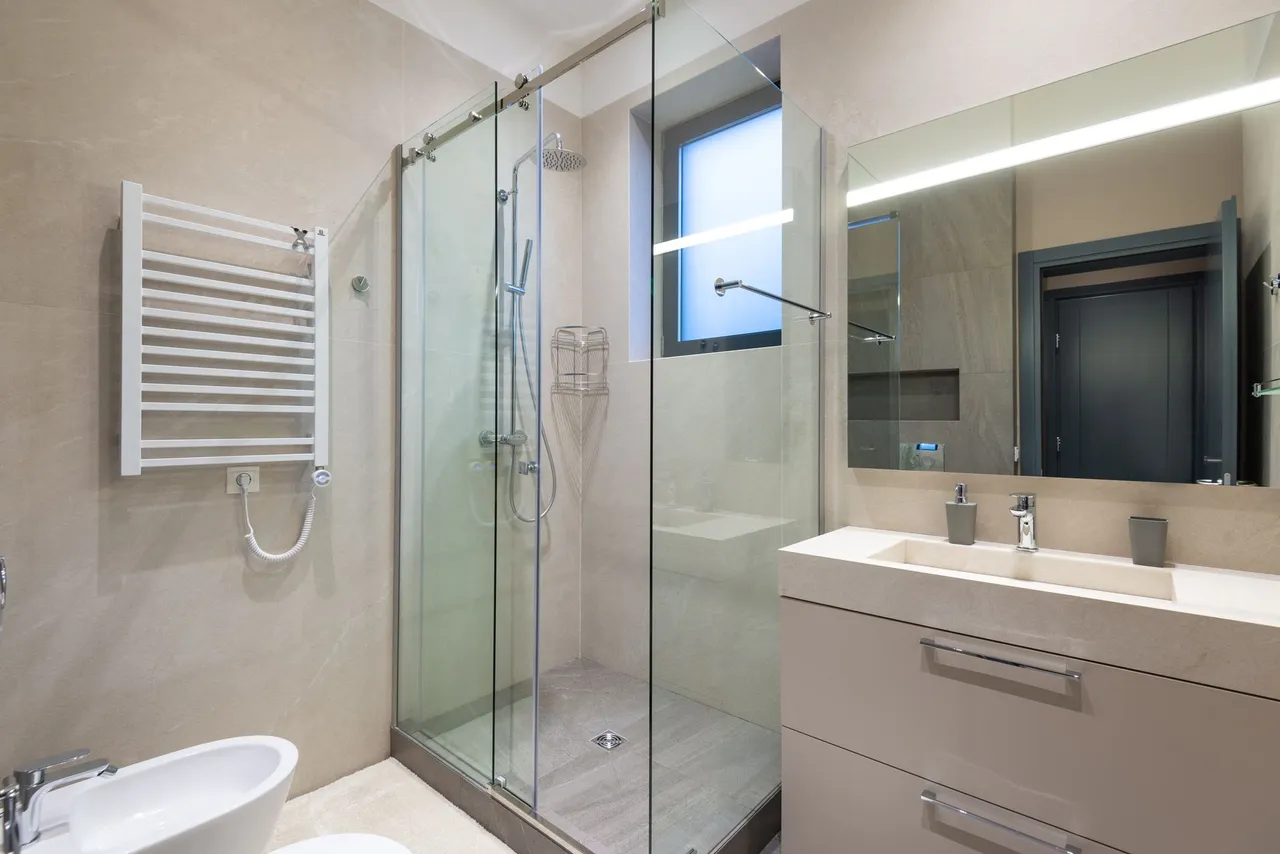
Planning a bathroom renovation budget means working out what the project genuinely requires before you commit to a number. A realistic budget separates essential trade work and licensing costs from fixture choices, then adds a contingency buffer for what walls and floors often reveal once demolition begins. Getting those layers clear before you request a project enquiry makes every quote conversation more productive.
Why budgeting a bathroom is different from other rooms
Bathrooms concentrate more licensed trades per square metre than almost any other domestic space. Plumbing, waterproofing, tiling and electrical work each carry their own regulatory requirements in South Australia, and those requirements do not disappear simply because the room is small. CBS South Australia advises that major bathroom or kitchen renovation projects require a builder with a licence permitting project coordination, in addition to any licensed plumber undertaking the wet work. Understanding that structure helps you read a quote correctly: labour and coordination costs are not inflated padding — they reflect the layered nature of compliant bathroom construction.
See also: Bathroom renovation cost for a broader breakdown of what individual line items typically represent.
Essential work: the non-negotiable spend
Before any fixture is chosen, certain categories of work must be costed regardless of the finish you want.
Demolition and disposal — Stripping an existing bathroom involves removing tiles, waterproofing membrane, substrate and sometimes wall linings. This generates significant waste requiring proper disposal, which attracts its own cost.
Waterproofing — Include the proposed waterproofing work and its coordination in the written scope. Ask the provider what requirements apply to the actual project, who will perform the work and what licence scope or qualifications are appropriate. Do not assume a separate South Australian waterproofing endorsement exists merely because a quotation uses that trade description.
Plumbing rough-in and fit-off — Whether you are moving fixtures or simply replacing them in existing locations, a licensed plumber must disconnect, re-pipe if needed and connect all tapware, showers, basins and toilets. Keeping fixtures in their existing locations typically reduces this cost considerably; relocating a toilet or shower to a new wall position adds meaningful labour and materials.
Electrical work — Exhaust fans, heated towel rails, lighting circuits and any in-floor heating require a licensed electrician. YourHome guidance on condensation notes that bathroom exhaust should discharge outdoors, not into a ceiling cavity — a detail that affects both installation method and cost.
Tiling — Labour and adhesive costs are separate from tile material costs. Complex layouts, floor-to-ceiling coverage and mosaic features all increase labour time.
When seeking quotes, ask each tenderer to separate these essential trade costs from fixture and fitting allowances. That separation is where meaningful comparison lives.
Fixture allowances: prime cost items and provisional sums
Building contract documentation can distinguish prime cost (PC) items and provisional sums. Understanding these two concepts protects your budget from unexpected shortfalls.
A prime cost item is a placeholder allowance for a specific item not yet selected — say, a wall-hung vanity or a shower mixer. If you subsequently choose a product that costs more than the allowance, you pay the difference. If it costs less, you receive a credit. The allowance your contractor nominates should be realistic for the quality tier you have discussed, not a figure set artificially low to make a quote appear competitive.
A provisional sum covers work whose scope cannot be fully determined until demolition reveals what is behind the walls. Rotted substrate, old waterproofing that must be fully removed, or non-standard existing plumbing connections are common examples.
SA Government guidance on builder responsibilities describes builders’ contract obligations and the treatment of allowances. Before signing anything, ask your chosen contractor to walk through every PC item and provisional sum in writing, explaining what that figure covers and how cost variations would be calculated and communicated.
Helpful internal resource: How to compare bathroom quotes explains how to read these line items side by side across multiple tenders.
Contingency questions: what hides behind bathroom walls
A contingency is not pessimism — it is the acknowledgement that bathrooms routinely conceal conditions that only become visible during demolition.
Asbestos is a significant consideration in older Adelaide homes. The SA Government asbestos guidance notes that bathroom and laundry materials in older homes may require professional assessment for asbestos before renovation disturbance, and that visual appearance alone is not a safe determination. If your property predates the early 1990s, factor in the possibility of an asbestos assessment and, if materials are present, appropriate licensed removal before work proceeds. This is not a DIY investigation.
Rotted framing or substrate — Water that has migrated behind failed grout or old membrane can damage wall studs and floor framing. Until tiles come off, the full extent is unknown.
Non-compliant previous work — Older renovations may not meet current standards. Discovering inadequate existing waterproofing or undersize drainage during your renovation can require rectification before new work can proceed compliantly.
There is no universal contingency amount established by the sources used here. Ask your contractor what contingency they recommend given the age and condition of your home, and keep that figure liquid rather than committing it to upgraded fixtures before demolition is complete.
A hypothetical scenario: fixture choices versus essential costs
This is a hypothetical example for illustration only, not a customer story.
Imagine a household comparing two fixture schedules against the same proposed scope. The first uses its preferred premium products; the second retains some existing selections. The household asks the provider to identify the actual price difference, any effect on installation and which costs remain estimates. It then considers what funds remain available for unresolved work. The exercise compares actual proposals without predicting hidden damage, borrowing needs or a guaranteed saving.
Checklist: questions to resolve before setting your final number
- Have you confirmed whether a builder with a project coordination licence is required for your scope?
- Are fixture allowances (PC items) realistic for the quality tier you have discussed?
- Has every provisional sum been explained in writing, including how variations will be communicated?
- Has the age of your property triggered an asbestos assessment question?
- Is your contingency buffer retained as cash rather than committed to fixtures?
- Does the electrical scope include the exhaust fan discharging outdoors, not into the ceiling?
- Have you compared quotes on a like-for-like scope? (See: How to compare bathroom quotes)
Working with the right professionals
SA Government guidance advises that consumers can check whether a builder is licensed for the particular work and ask for explanations of unclear contract terms. Verifying a contractor’s licence before signing is a straightforward step that the SA Government consumer resources support. CBS similarly notes that plumbing work requires an appropriately licensed plumber — not a general handyperson or the builder performing other tasks.
If you are planning a smaller second bathroom or wet room, the same budgeting principles apply. See Ensuite Renovations for scope considerations specific to that format, and Small bathroom layout planning if the footprint itself is under review.
Ask whether the proposed programme changes any pricing assumptions or product-order commitments. Bathroom renovation timelines gives context on realistic project durations that affect how you stage payments and decisions.
Further reading
- SA Government — Choosing a building professional: https://www.sa.gov.au/topics/housing/buying-building-selling/building-a-home/choosing-a-building-professional
- CBS SA — Always use a licensed plumber: https://www.cbs.sa.gov.au/campaigns/always-use-a-licensed-plumber
- SA Government — Builder responsibilities: https://www.sa.gov.au/topics/business-and-trade/building-industry/planning-professionals/builder-responsibilities
- SA Asbestos — Find and identify asbestos in the home: https://asbestos.sa.gov.au/in-your-home/asbestos-in-your-home/find-and-identify-asbestos-in-the-home
- YourHome — Condensation: https://www.yourhome.gov.au/passive-design/condensation
Discuss your project
This guide helps prepare questions; it is not a site assessment, design specification or professional approval. Read about bathroom renovations in adelaide before making a project enquiry.