
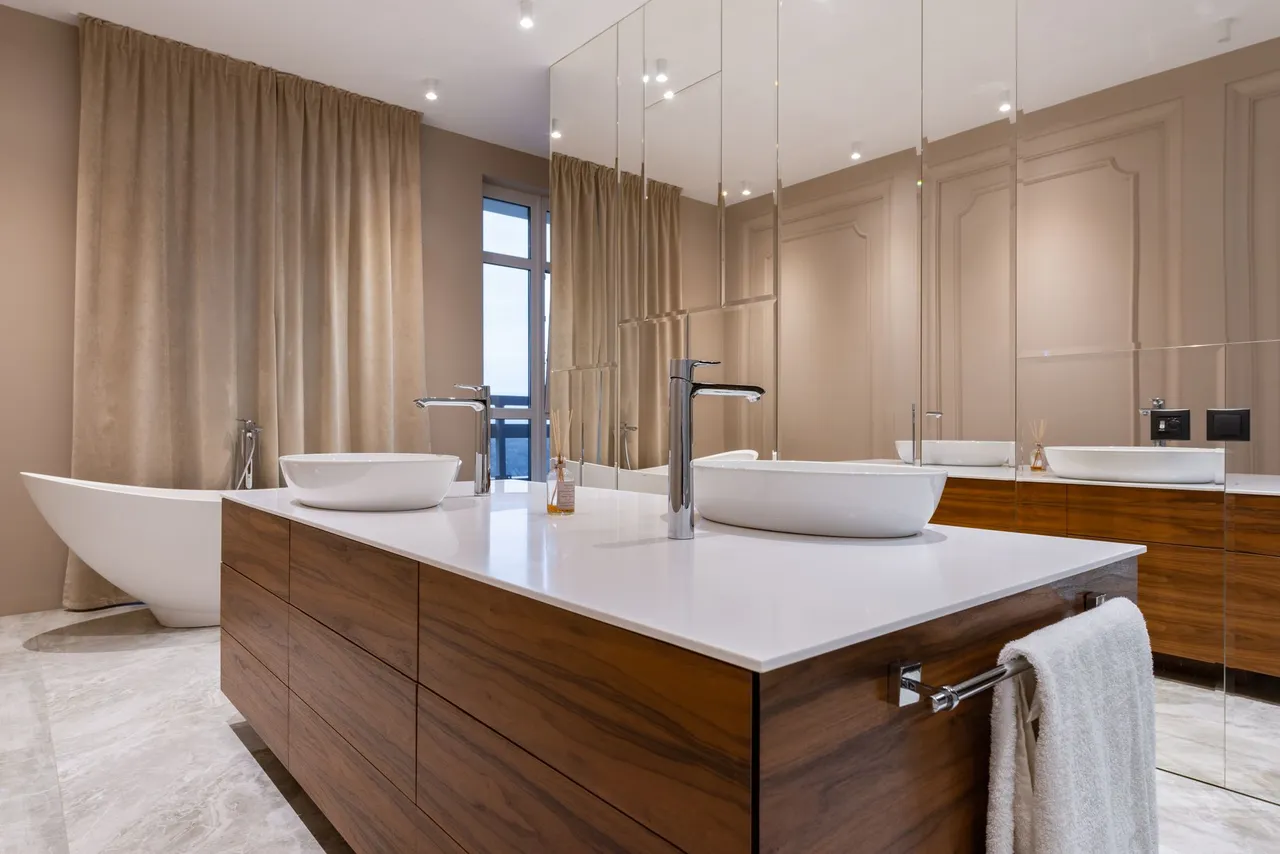
Which path is right for your bathroom?
A bathroom makeover refreshes the visible surfaces and fittings while leaving the layout, waterproofing membrane, plumbing rough-in and wall structure in place. A complete renovation strips back to the substrate, relocates or replaces everything, and starts fresh. The right choice depends almost entirely on the condition of what is already behind and beneath your bathroom — not just what you can see on the surface.
Assessing the existing condition before you decide
The single most important step before committing to either scope is an honest assessment of the bathroom’s bones. Surface-level wear — faded grout, dated tapware, old vanity cabinetry — does not necessarily indicate structural or waterproofing failure. Conversely, tiles that look acceptable can conceal a failed membrane, rising damp or rotted substrate.
Signs that may point toward a full renovation rather than a makeover include:
- Soft or spongy flooring around the shower base or toilet — a possible indicator of water damage to the subfloor
- Persistent mould that returns quickly after cleaning, suggesting moisture is moving through the substrate
- Cracked or lifting tiles that allow water infiltration
- Inadequate or absent ventilation, where moisture has visibly damaged walls and ceilings over many years
- A layout that simply does not work — insufficient storage, poor traffic flow or a shower recess that is too small
If the waterproofing membrane is at or beyond the end of its serviceable life, a makeover that leaves it in place is a short-term fix. A licensed builder or tiler can lift a tile in a low-visibility location to inspect the membrane condition; this is worth requesting before you finalise a scope.
For older Adelaide homes — particularly those built before the mid-1980s — bathroom wall and ceiling sheeting may contain asbestos. Visual appearance alone is not a reliable way to identify asbestos-containing materials, and disturbance without professional assessment carries serious health risks. If your home is from that era, factor a formal assessment into your planning before any work begins, regardless of scope. The South Australian government’s asbestos resources recommend professional assessment before renovation disturbance of suspected materials.
What a makeover typically covers
A bathroom makeover works within the existing footprint without relocating drains, moving walls or replacing the waterproofing membrane. Common elements include:
- Replacing vanity, basin and tapware
- Updating the toilet suite
- Regrout or retile over existing tiles (where the substrate is sound)
- New shower screen or bath panel
- Replacing light fittings and exhaust fan (electrical work requires a licensed electrician)
- Repainting walls and ceiling
- New accessories — towel rails, mirrors, toilet roll holders
Because a makeover does not disturb plumbing rough-in, structural elements or the waterproofing membrane, it typically involves fewer licensed trades in a coordinating role and completes in less time than a full renovation. The tradeoff is that existing problems remain.
What a complete renovation covers
A full bathroom renovation starts from the structure outward. Everything is stripped, inspected and rebuilt to current standards. This scope allows for:
- Full waterproofing replacement
- Layout reconfiguration — moving the shower, relocating the toilet or bath
- Subfloor repair if water damage is found
- Upgraded or relocated electrical and plumbing rough-in
- New ventilation ducted properly to outside (bathroom and laundry exhaust should discharge outdoors, not into a ceiling cavity)
- Complete tile selection across all wet areas
Any work that involves relocating drains or moving plumbing rough-in must be carried out by an appropriately licensed plumber. The Consumer and Business Services (CBS) in South Australia advises that major bathroom renovation projects also need a builder with a licence permitting project coordination. When you receive a quote for a full renovation, ask clearly which licensed trades will be involved and what their role in the project is.
Building contract documentation for a renovation can include prime cost items and provisional sums — allowances for materials not yet fully specified. The SA Government notes that consumers are entitled to clear written explanations of these allowances. If a quote contains items described as provisional, ask the contractor to clarify what the final range could be and under what circumstances it would change.
A hypothetical scenario: same bathroom, two scopes
The following is a hypothetical example to illustrate decision factors — it is not based on a real customer.
Imagine a 1990s Adelaide home with a main bathroom showing intact but very dated 100 mm tiles, an older single-lever mixer tap, a timber-framed vanity with surface rust on the hinges, and a shower screen with calcium build-up. The grout is discoloured but structurally sound. No soft spots exist in the floor. Ventilation is a wall grille rather than a ducted fan.
In this scenario, a makeover — new vanity, tapware, toilet suite, shower screen and exhaust fan ducted externally — could address nearly all visible problems without opening the walls. The existing tile, while dated, is adhered and watertight.
Now change one detail: the shower recess floor tiles rock slightly underfoot and there is a faint musty smell near the base. That single change shifts the risk calculation significantly. A makeover that retiles over a compromised membrane or damaged substrate is borrowing against future expense. Here a full renovation that opens the floor, confirms or replaces the membrane, and rebuilds the shower correctly is the more defensible choice even if it costs more upfront.
What stays the same in both scopes
Whether you choose a makeover or a full renovation, certain responsibilities and considerations remain constant:
- Licensed trades are required for plumbing and electrical work regardless of scope. CBS is clear that plumbing work requires an appropriately licensed plumber.
- Ventilation matters in both cases. A bathroom exhaust fan is not optional in an enclosed space. Any replacement fan should discharge outdoors, not into a ceiling void.
- Written scope and documentation protect you in both scenarios. Before any work starts, ensure the scope is in writing and you understand what is and is not included.
- Checking contractor licensing is your responsibility. The SA Government advises consumers to verify that a builder is licensed for the particular type of work proposed.
Comparing quotes for different scopes
Makeover and renovation quotes are genuinely difficult to compare directly because the scope is so different. When reviewing a bathroom makeover quote alongside a full renovation quote, look for clarity on:
- What is being removed and disposed of versus retained
- Whether waterproofing is included, and if so, to what areas
- Which fixtures and fittings are supplied by the contractor versus owner-supplied
- What provisional sums or allowances are included and their estimated range
- Which trades are subcontracted and whether those trades are licensed
Our guide on how to compare bathroom quotes walks through the specific questions worth raising before you sign anything. You can also review the bathroom renovation cost guide for context on how scope affects pricing, and the bathroom renovation timelines guide if project duration is a key factor for your household.
Small bathrooms: does scope change the equation?
In a small bathroom, a makeover can have a disproportionately large visual impact because every element is close together. Replacing a bulky old vanity with a wall-hung unit, for example, frees up floor space without touching the plumbing rough-in if the new unit centres on the existing rough-in point. Our small bathroom layout planning guide explores how space works in compact rooms.
That said, small bathrooms are also the rooms where layout problems are most keenly felt. If the existing layout genuinely does not function — the door swings into the toilet, or the shower is too narrow to use comfortably — a makeover will not solve it. Only a renovation that relocates fixtures can.
Ready to explore your options?
If you are ready to get a clearer picture of which scope suits your bathroom’s condition and your goals, connecting with an experienced contractor is the most useful next step. Use our bathroom renovations service page to submit a project enquiry, or explore options for ensuite renovations and laundry renovations if other wet areas are also due for attention.
Further reading and sources
- SA Government — Choosing a building professional
- Consumer and Business Services SA — Always use a licensed plumber
- SA Government — Builder responsibilities
- Asbestos SA — Find and identify asbestos in the home
- Australian Government YourHome — Condensation
Discuss your project
This guide helps prepare questions; it is not a site assessment, design specification or professional approval. Read about bathroom renovations in adelaide before making a project enquiry.