
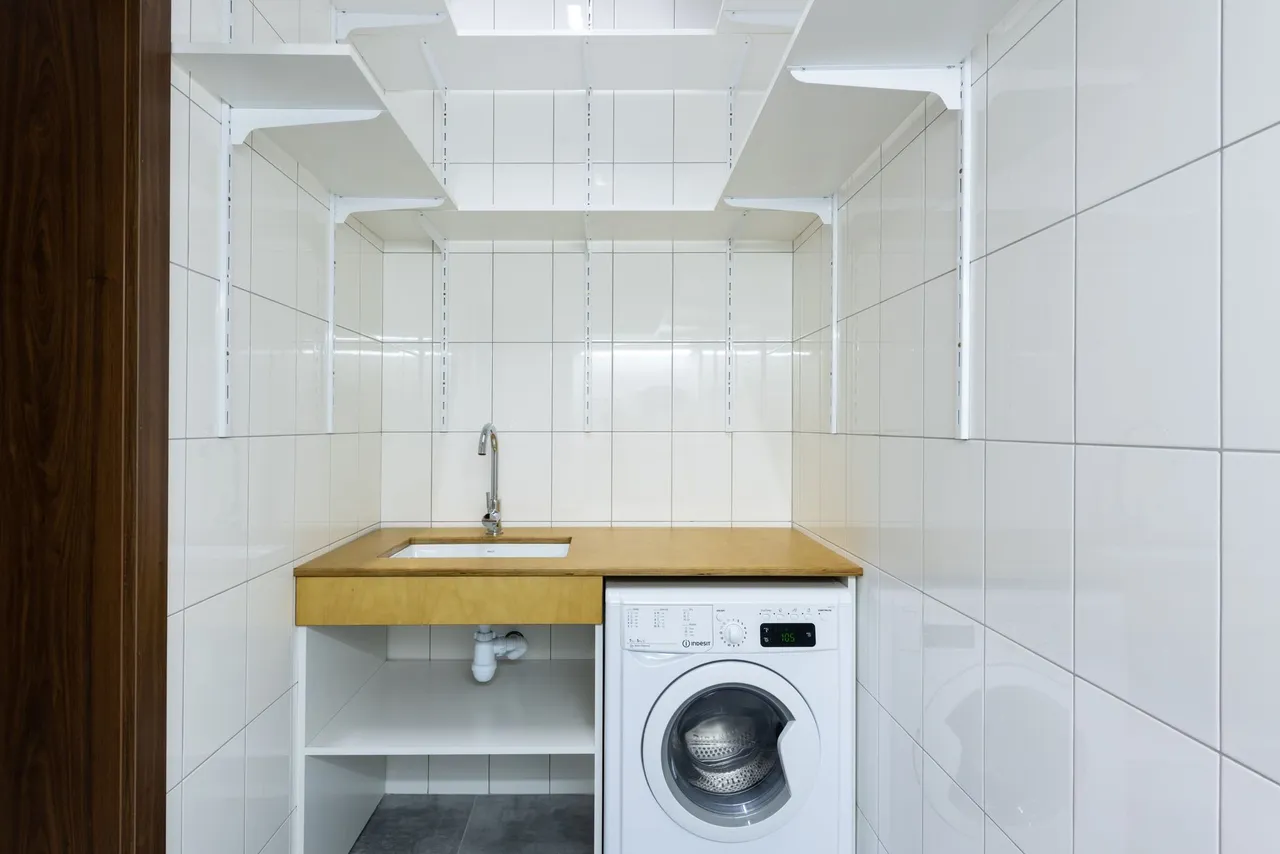
Which laundry benchtop material suits your home?
The right laundry benchtop depends on how you use the space, how much moisture it regularly encounters, and what your cabinetry layout allows. Ask suppliers about currently lawful products suited to the proposed laundry use, with written moisture, cleaning and installation requirements. SafeWork SA explains that the manufacture, supply, processing and installation of engineered stone benchtops, panels and slabs has been prohibited since 1 July 2024. Existing undisturbed products do not have to be removed merely because of the ban; permitted work on legacy products has specific conditions. Do not treat an old product photograph or catalogue as evidence that a new installation is allowed. Ask the supplier and appropriately qualified provider to identify the actual product and applicable requirements; do not attempt cutting or modification yourself.
Understanding working space before choosing a surface
Before settling on a material, map out how the benchtop will actually be used. A laundry bench serves very different functions depending on the household: folding and sorting dry clothes, hand-washing delicates, stacking appliances side by side, or housing a utility sink with a generous flat area either side.
These use cases directly affect the decisions you bring to a renovation conversation:
- Depth: A bench that sits over a front-loading washer needs to match the appliance depth without creating an awkward overhang. A freestanding folding station can be shallower.
- Height: Standard bench height suits most folding tasks, but taller occupants or those who want to avoid bending at the sink may prefer a higher working surface. This is a question to raise with your renovator, not something to decide from a product brochure alone.
- Overhang and edge profile: A square or waterfall edge looks clean but can catch drips; a slight front overhang helps direct water away from cabinet doors.
- Continuity: Whether the bench wraps a corner, bridges over appliances, or terminates at a wall affects the joinery complexity and the material’s suitability — some stone slabs have weight and span limitations that your renovator’s fabricator can advise on.
For further guidance on how working space interacts with the broader room, see our small laundry layout planning and laundry cabinetry planning guides.
A practical look at common material options
Compact laminate (solid-core laminate): Unlike standard post-form laminate applied to a particleboard substrate, compact laminate is dense throughout. It resists moisture penetration at cut edges and is straightforward to clean. The surface is not heat-proof, so a trivet near an iron or steamer is sensible practice. It is widely available and suits most budget ranges.
Acrylic solid surface: Seamless joins, an integrated sink option, and repairability through light sanding make acrylic solid surface a popular laundry choice. It is susceptible to scratching from sharp objects but recovers well from most daily wear.
Legacy engineered stone: This is not a recommendation for a new benchtop. The prohibition described above applies to new engineered stone benchtops, panels and slabs. If an existing bench is involved, ask a qualified provider about the specific permitted work and current SafeWork SA requirements before arranging any modification or removal.
Porcelain tile over substrate: A tiled bench with a suitable waterproof membrane beneath is very durable and allows creative finishes, but grout lines require regular cleaning in a laundry environment where lint and detergent residue accumulate.
Natural stone (marble, granite): Natural stone requires periodic sealing and is susceptible to staining from some laundry chemicals. It is better suited to decorative or occasional-use benches than a high-traffic working surface.
Moisture, ventilation and surface longevity
Laundries generate sustained humidity from hot washes and dryer exhaust, and that moisture affects every surface material over time — not just the benchtop itself. Condensation forms when warm, moist air contacts a cooler surface, which can affect the underside of a benchtop, the top surface of cabinetry, and surrounding walls. Good exhaust ventilation discharged outdoors — not into a roof cavity — reduces the moisture load on all these surfaces. (Australian Government YourHome guidance on condensation explains how ventilation, airtightness and insulation interact in moisture management.)
When thinking about benchtop longevity, ask your renovator:
- How the substrate (the board beneath the surface) is specified — moisture-resistant particleboard or HMR board behaves differently from standard particleboard.
- How seams, cutouts and wall junctions are sealed, particularly around sinks.
- Whether the material you favour has specific maintenance requirements that suit your household habits.
Getting and understanding product samples
Most suppliers provide physical samples, and they are genuinely worth obtaining before you commit. A sample helps you do several things that a website image cannot:
- See the colour under your laundry’s actual light conditions, particularly if the room has limited natural light.
- Feel the surface texture and assess whether it will trap lint or be easy to wipe clean.
- Hold it against your existing tiles, cabinetry or floor to judge tonal compatibility.
- Assess thickness, which affects the edge profile options available and how the bench sits visually against cabinetry.
Hypothetical scenario for illustration: Imagine a household comparing two compact laminate colours that looked identical on a screen. Under the laundry’s single ceiling batten light, one read slightly grey against their existing floor tiles while the other remained neutral. Physically testing samples in situ revealed this — a step that saved an ordering mistake.
Keep samples long enough to view them at different times of day, particularly if your laundry has a window that lets in variable natural light.
Care and maintenance by material type
Understanding upkeep before purchase prevents disappointment. A simple comparison:
| Material | Scratch resistance | Water resistance at seams | Heat resistance | Repair ease |
|---|---|---|---|---|
| Compact laminate | Moderate | Good (solid core) | Low–moderate | Limited |
| Acrylic solid surface | Low–moderate | Excellent (seamless) | Low | High |
| Porcelain tile | High | Good (if grouted well) | High | Moderate |
| Natural stone | Moderate–high | Low without sealing | Moderate | Low |
For cleaning, avoid abrasive scourers on acrylic and laminate surfaces, and follow the actual product manufacturer’s cleaning instructions and check compatibility before using laundry chemicals.
Coordinating your benchtop selection with the broader renovation scope
A benchtop selection rarely happens in isolation. Sink choice, tapware position, cabinetry height and splashback material all interact with the bench decision. If you are renovating the laundry and bathroom at the same time, coordinating finishes early avoids ordering conflicts — our laundry and bathroom renovation coordination guide covers this planning step.
Any plumbing work associated with sinks or relocated tapware requires a licensed plumber. If your project involves broader structural or cabinetry changes, Consumer and Business Services advises that major renovation work, such as a new bathroom or kitchen, needs a builder whose licence allows coordination of the whole process. Before work begins, the SA Government recommends verifying that any building professional holds a licence appropriate to the work proposed.
If your home was built before the mid-1980s, laundry surfaces and substrates may contain asbestos-containing materials. SA Health advises that visual inspection alone cannot safely identify asbestos, and professional assessment is necessary before renovation disturbance.
What to bring to a renovation quote conversation
Arriving at a quote conversation with clear preferences shortens the process considerably. A useful preparation checklist:
- Measurements of the bench area (width, depth, and whether appliances sit beneath)
- Notes on how the bench is primarily used (folding, sink only, appliances on top)
- Preferred material shortlist based on care commitment and budget
- Samples or photos showing existing tiles or flooring you want to complement
- Any ventilation concerns or known moisture issues in the current room
- Questions about how prime cost items and provisional sums will be documented in the contract, as SA Government guidance on builder responsibilities notes that clear written scope and explanations of allowances protect both parties
For a broader view of renovation budgeting, our laundry renovation cost questions guide explains the variables that influence final pricing. When you’re ready to explore your options with a renovator, request a project enquiry through our laundry renovations service page.
Further reading and sources
- SA Government — Choosing a building professional
- Consumer and Business Services SA — Always use a licensed plumber
- SA Government — Builder responsibilities
- Asbestos SA — Find and identify asbestos in the home
- Australian Government YourHome — Condensation
Discuss your project
This guide helps prepare questions; it is not a site assessment, design specification or professional approval. Read about laundry renovations in adelaide before making a project enquiry.