
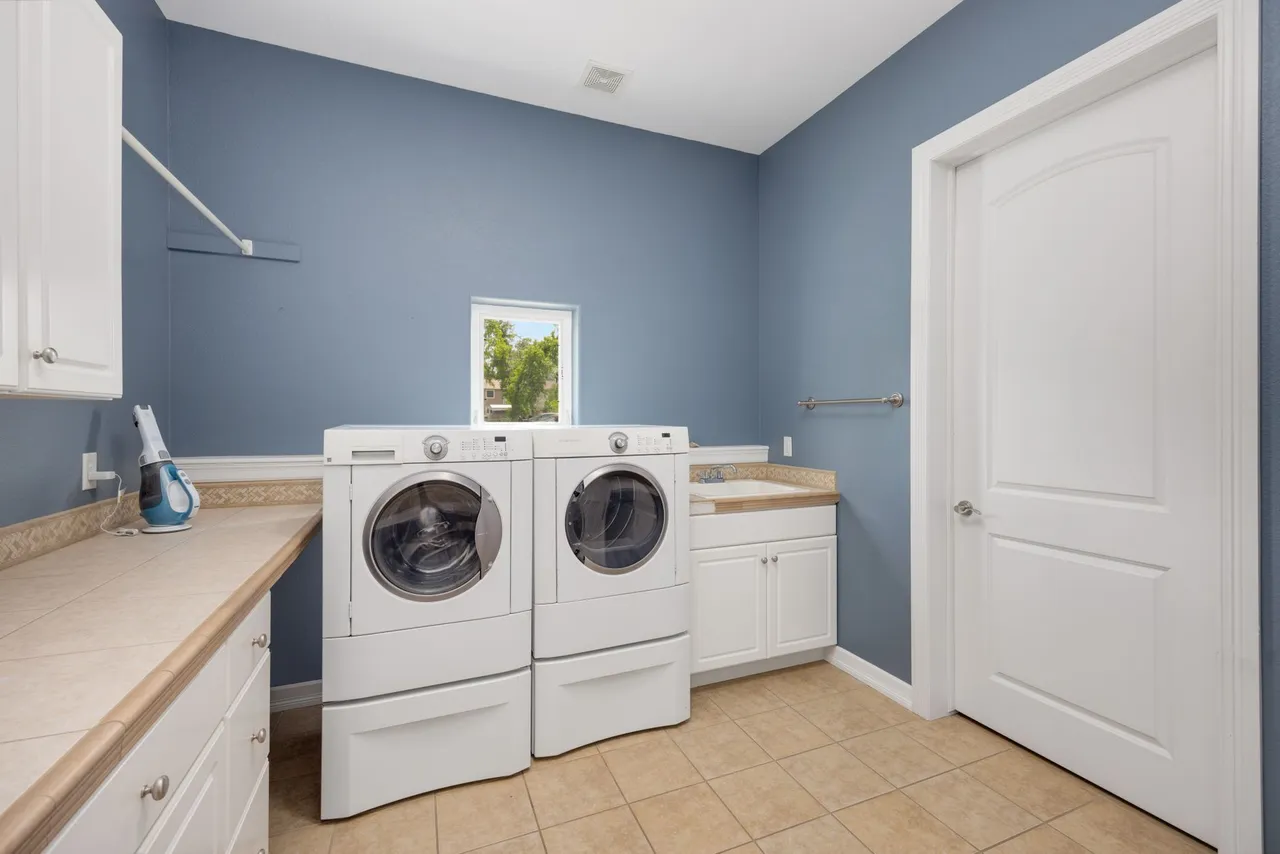
Effective laundry cabinetry planning starts well before you contact a renovator. The decisions you make about what you need to store, how the interior of each cabinet is configured, and which materials suit a wet-area environment will shape both the final quote and how satisfied you are with the finished space. This guide walks through the practical groundwork so you arrive at a laundry renovation consultation with a clearer brief.
Why Planning Before You Quote Saves Rework
Cabinetry belongs in the written laundry renovation scope. Ask how changes after manufacturing would affect the quoted price and schedule. Knowing your storage categories, preferred internal fittings and shortlisted materials before you request a laundry cabinetry Adelaide quote means the scope your renovator prices is the scope you actually want. It also makes it easier to compare quotes on a like-for-like basis. For background on the financial side of planning, see our guide to laundry renovation cost questions.
Start With Everything You Need to Store
The most common planning mistake is designing cabinet carcasses first and then trying to fit storage needs into them. Working the other way around produces better outcomes. Walk through a typical laundry week and list every category:
- Detergents and laundry products: measure the actual containers and discuss storage needs with the cabinet designer.
- Linen and towels: decide whether these are stored here or moved to another cupboard.
- Ironing equipment: compare the actual board or proposed fold-out system with the space available for use and storage.
- Cleaning equipment: record the height and shape of the mop, broom and bucket rather than choosing a cupboard from a generic measurement.
- Other household items: list any additional storage you want, then check whether it belongs in the laundry.
- Appliances: provide the exact model information so required clearances and service access can be assessed.
Writing this list before meeting a designer means you can review whether a proposed layout actually accommodates your reality, not an average household.
Understanding Internal Fittings Options
The carcass — the box itself — is only part of a cabinet’s value. Internal fittings determine how usable the space is day to day. Common options worth asking about include:
Adjustable shelving is the simplest and most flexible option. Shelf-pin systems allow you to reconfigure heights as your storage needs change, which matters if you have young children whose product sizes shift over time.
Pull-out drawers on soft-close runners make deep lower cabinets far more accessible than fixed shelves. The full depth of the cabinet becomes usable rather than leaving items buried at the back.
Integrated laundry hampers — single or divided — fit inside a lower cabinet with a hinged or slide-out frame. Dividing lights from darks at the point of undressing reduces sorting time later.
Drying rails can be built into tall cabinets or installed as a pull-out bar above the bench, useful in Adelaide’s cooler months when outdoor drying is impractical.
Electrical outlet positioning inside cabinets — for a hair dryer, handheld steamer or phone charger — needs to be coordinated with your electrician before joinery is installed, not after.
For compact spaces, our small laundry layout planning guide explores how internal fittings can compensate for limited floor area.
Hypothetical Planning Scenario
This is a hypothetical example to illustrate how storage categories drive cabinet decisions, not a real customer account.
A hypothetical storage audit: a household wants to accommodate cleaning supplies, uniforms awaiting washing, an ironing board and a bulky pet-food container. Instead of prescribing cupboard sizes, it groups those items by use, measures the awkward ones and asks the cabinet designer to compare feasible arrangements. The brief records what each proposed storage area must do, which items need restricted access and how appliances remain accessible. The resulting proposal can then be checked against the actual inventory.
Choosing Materials for a Wet Environment
Laundries are high-humidity spaces. Cabinet materials need to tolerate moisture without swelling, delaminating or growing mould behind finished surfaces.
Moisture-resistant (MR) board is the minimum substrate standard for laundry and bathroom joinery. Standard particleboard is not appropriate even if the exterior is well-sealed, because exposed edges at hinges or under sinks will absorb moisture over time.
Polyurethane (PU) door finishes are non-porous and wipe clean easily, making them well-suited to laundry environments. They are available in a wide colour and sheen range.
Laminate doors in a high-pressure laminate (HPL) specification offer strong moisture resistance and are often more cost-accessible. The edge treatment matters — poorly sealed edges remain a vulnerability.
Timber veneer in a laundry can work if properly sealed and kept away from direct water splash zones, but it generally requires more maintenance than PU or HPL alternatives.
Benchtop materials deserve separate consideration. Stone and solid surface products handle moisture well but need correctly siliconed joints at sinks and walls. Laminate benchtops with a post-formed edge are an economical option provided the substrate is MR-rated.
When requesting material samples from a cabinetmaker, ask specifically for the substrate specification in writing — not just the door finish. This matters especially in renovation quotes where provisional sums may leave substrate selection open. The SA Government notes that building contract documentation can distinguish prime cost items and provisional sums, and consumers benefit from understanding exactly what allowances cover before signing.
Ventilation and Moisture Management
Cabinetry in a poorly ventilated laundry will degrade faster regardless of how well it is built. Condensation forms when moist air meets cooler surfaces, and laundries generate significant moisture during wash and drying cycles. Exhaust ventilation that discharges outdoors — not into a roof cavity — is important for managing this. Discuss ventilation with your renovator at the planning stage rather than treating it as an afterthought. See our guide on laundry and bathroom renovation coordination for more on sequencing trades correctly.
Older Homes: Check Before You Disturb
If your laundry is in an older Adelaide home, existing wall or ceiling materials may warrant assessment before cabinetry installation begins. Bathroom and laundry materials in older homes may require assessment for asbestos before renovation disturbance, and visual appearance alone is not a safe method of identification. Raise this with your renovator early so any professional assessment can be factored into the project timeline.
Working With Licensed Trades
Cabinetry installation intersects with plumbing (for under-bench sinks and tap connections) and electrical work (for internal power points or lighting). Plumbing work requires an appropriately licensed plumber, and major renovation projects generally require a licensed builder to coordinate trades. Before committing to a contract, it is reasonable to ask any proposed renovator to explain their licence coverage for the full scope of work. South Australia’s CBS provides guidance on checking this independently.
When you are ready to move forward, request a project enquiry to connect with a renovator who can review your brief and provide a written scope and quote.
Further reading and sources
Discuss your project
This guide helps prepare questions; it is not a site assessment, design specification or professional approval. Read about laundry renovations in adelaide before making a project enquiry.