
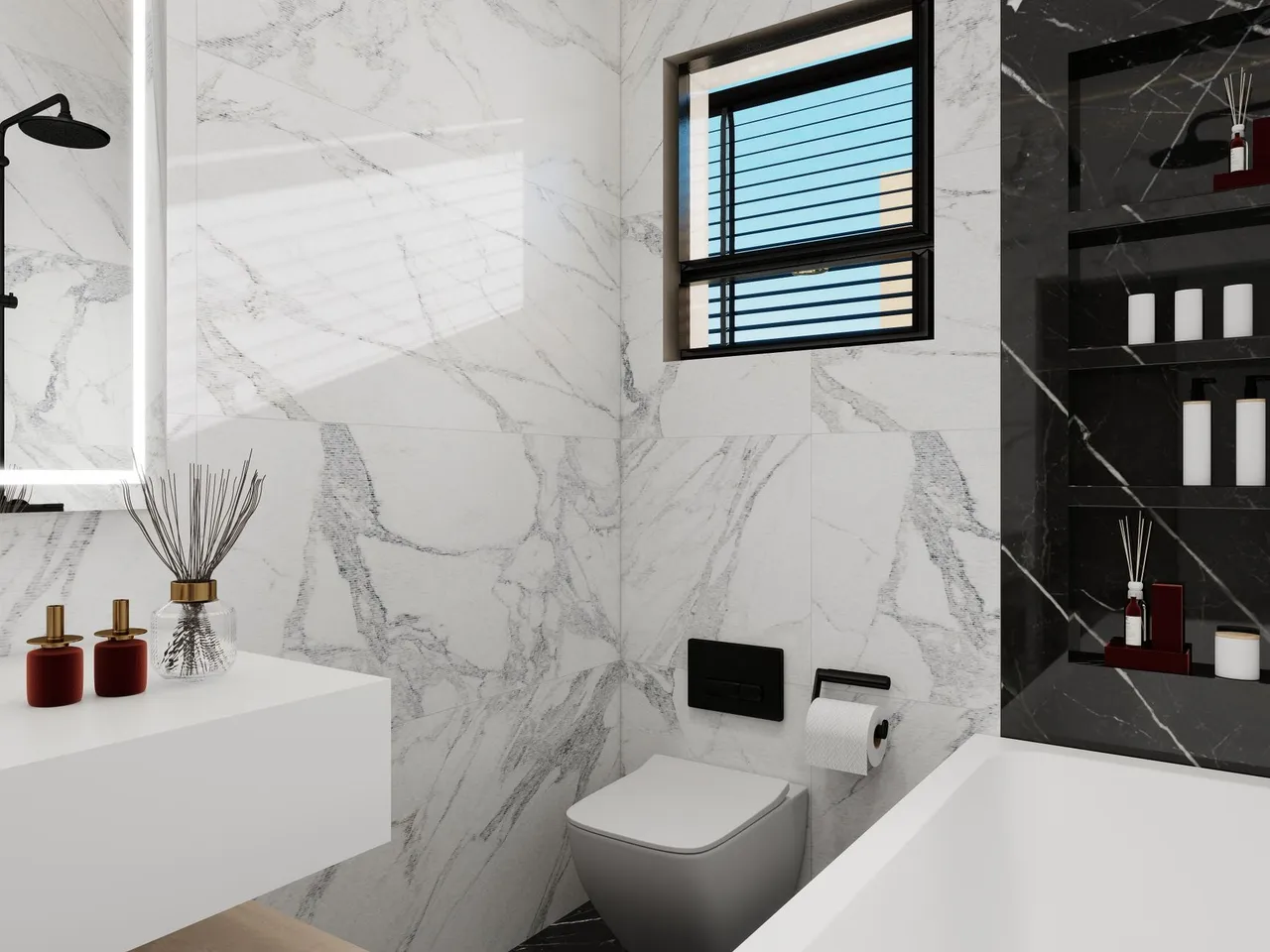
Before bathroom waterproofing work begins in Adelaide, ask your renovator about their licence category, who will install and certify the membrane, what documentation you should receive, and how substrate and asbestos assessments will be handled. Raising these questions before tiles are laid — not after — gives you a clear picture of who is responsible for what and which aspects genuinely require a licensed professional’s judgement.
Why timing matters with waterproofing questions
Bathroom waterproofing is one of the least visible and most consequential parts of any renovation. Once tiling is complete, the membrane is inaccessible. Moisture that bypasses inadequate waterproofing can compromise structural elements and go undetected for years. This guide focuses on the questions worth raising before work begins — not on making you the technical authority. That role belongs to your licensed renovator and any specialist trades they engage.
Who is legally responsible for waterproofing in a bathroom renovation?
This is the first question worth pinning down clearly. Responsibility for waterproofing generally sits with the builder or renovation contractor coordinating the project, but the picture has layers.
According to Consumer and Business Services SA, if you are undertaking major renovation work — such as a new bathroom — you need to hire someone with a builder’s licence that allows them to coordinate the whole process. Plumbing components within that project must be performed by an appropriately licensed plumber. Ask who will undertake the waterproofing, what licence scope applies to that person or business, and how the coordinating builder will verify that scope before work starts. Do not assume a trade title alone establishes authorisation for the proposed work.
The SA Government advises that you can check whether a contractor is licensed for specific work by asking to see their licence, and you can verify it independently through the SA Government’s public register of licensed builders and tradespeople. Building professionals can only carry out work they are qualified and licensed to perform.
In practical terms, your renovator should be able to tell you clearly:
- Their own licence category and number, so you can verify it yourself.
- Which trades they are subcontracting and whether those subcontractors hold the relevant licences for their scope — waterproofing, plumbing, electrical.
- Who takes responsibility if waterproofing fails — this should be addressed in your written contract, not left as a verbal assurance.
What documentation should you request before work begins?
A well-run bathroom renovation generates a paper trail. Asking for documentation upfront is ordinary due diligence, and experienced renovators expect it.
Licence details: Ask for the contractor’s licence number and the category it covers. Cross-check it yourself using the SA Government’s public register.
Written scope of works: SA Government guidance requires builders to have a written contract for domestic building work worth $20,000 or more, and that contract must clearly set out pricing terms. The same guidance explains that contracts may include prime cost items — which allow the contractor to charge for items of a higher standard than normally provided — and provisional sums, which give an estimate for specific costs where the final figure is not yet certain. This is especially relevant when bathroom vanity selections or feature tiling choices carry variable pricing. Before signing, ask for plain-language explanations of any cost allowances in your contract, and ask the person to show you the contract reference if anything is unclear.
Waterproofing specification: Ask which areas will be waterproofed (floor, wall upstands, wet area perimeter), what membrane system is proposed, and how the work will be inspected before tiling proceeds.
Certificate or compliance document: Ask your renovator whether a waterproofing certificate or compliance document will be issued on completion, and by whom. SA Government guidance confirms that licensed contractors must issue a statement of compliance for building work that requires approval — clarify with your renovator whether this applies to your project.
Subcontractor details: Request the names and licence numbers of any trades handling plumbing or waterproofing specifically.
Which aspects genuinely require professional assessment?
Some waterproofing questions cannot be answered by looking at a photo or reading a product specification. Here are the situations that warrant professional assessment before decisions are made.
Substrate condition: Whether the existing substrate is a concrete slab, particleboard or compressed fibre cement affects membrane selection and preparation requirements. A renovator should assess this in person.
Wet area boundaries in an ensuite: Where a shower abuts a vanity area or transitions to a timber-floored hallway, the exact extent of the waterproofed zone matters. This is particularly relevant in ensuite renovations where the layout may be less standard than a main bathroom.
Existing membrane condition in a renovation: If you are renovating rather than building new, your renovator needs to assess whether any existing waterproofing membrane can be incorporated or must be fully removed. This cannot be assumed from a visual check.
Asbestos in older homes: According to Asbestos SA, it is not possible to find out whether a material contains asbestos simply by looking at it. If you are unsure whether a material contains asbestos but think it is likely, the guidance is to play it safe — assume it does, or get it tested by a NATA-accredited laboratory. Bathroom and laundry areas are specifically listed as common locations where asbestos-containing products can be present in homes built before the mid-1980s. The SA Government’s builder responsibilities guidance also states that builders should check for asbestos before starting work and that any asbestos removal should be done by a licensed professional. If your home is of that era, raise this with your renovator and ask how they handle the assessment process before demolition begins.
A hypothetical pre-renovation conversation
This is a hypothetical illustration, not a customer story.
Imagine a homeowner in an older Adelaide suburb planning to convert a large main bathroom into a walk-in shower with a freestanding vanity. Before signing anything, they ask the renovator:
- What licence category covers this project, and can I look it up on the SA register?
- Who will apply the waterproofing membrane, and will they provide a written compliance document?
- The home was built in the 1970s — how do you handle the asbestos assessment step before demolition?
- The scope mentions a provisional sum for tiling — what triggers a variation from that allowance?
- Where does the exhaust fan discharge, and will that be shown in the scope?
A renovator who answers these questions clearly and in writing is demonstrating the kind of project management that reduces disputes later. Hesitation or vague answers to any of these is worth following up before work begins.
Ventilation: a waterproofing-adjacent question worth raising
Waterproofing manages liquid water, but moisture vapour is a separate issue. The Australian Government’s YourHome resource advises that bathroom exhaust should be vented directly outdoors — not into a roof cavity — to manage moisture effectively. Inadequate ventilation can cause ongoing moisture damage to surfaces even when the waterproofing membrane itself is correctly applied. Ask your renovator how the exhaust fan will be installed and where it will discharge. This is particularly relevant in ensuite bathroom design where ceiling cavities may be shared with other rooms.
Questions specific to bathroom tiling and waterproofing interaction
Tile finishes in a shower are not a substitute for a correctly applied membrane beneath them, and grout is not a waterproofing system. When reviewing your bathroom tiling choices with your renovator, ask:
- Will large-format tiles require extra substrate preparation to ensure the membrane is not compromised at joins?
- How will junctions between floor and wall tiles be handled at the shower base?
- Are movement joints planned at the perimeter, and are they compatible with the waterproofing system?
These are questions for your tiler and renovator together, not something to resolve through your tile supplier.
Before you submit a project enquiry
Preparing a list of questions like those above before you speak to renovators puts you in a better position to compare proposals meaningfully — not just on price. For further reading on cost structures, see our ensuite renovation cost questions guide. If you are working with a compact space, small ensuite storage ideas may also be useful context before finalising your brief.
If you are planning bathroom waterproofing work in Adelaide and would like possible referral to renovators in the area, you can submit a project enquiry through our Bathroom Renovations service page.
Further reading
- SA Government — Choosing a building professional: https://www.sa.gov.au/topics/housing/buying-building-selling/building-a-home/choosing-a-building-professional
- Consumer and Business Services SA — Always use a licensed plumber: https://www.cbs.sa.gov.au/campaigns/always-use-a-licensed-plumber
- SA Government — Builder responsibilities: https://www.sa.gov.au/topics/business-and-trade/building-industry/planning-professionals/builder-responsibilities
- Asbestos SA — Find and identify asbestos in the home: https://asbestos.sa.gov.au/in-your-home/asbestos-in-your-home/find-and-identify-asbestos-in-the-home
- Australian Government YourHome — Condensation: https://www.yourhome.gov.au/passive-design/condensation
Discuss your project
This guide helps prepare questions; it is not a site assessment, design specification or professional approval. Read about ensuite renovations in adelaide before making a project enquiry.